Cards
How each agent gets one Abazi virtual card, and how Abazi approves, declines or challenges every authorization under the same mandate as any other payment.
The problem it removes
Most merchants take cards, and a card number handed to an agent is a credential that spends until someone cancels it. Abazi Cards keeps the card rail without the credential problem. The card works only for purchases Abazi has already decided, and a number that leaks is useless without a matching purchase.
Who uses it
| Who | How |
|---|---|
| Owners | Create a card for an agent, with a limit per payment no higher than the card hard cap in its mandate. |
| Agents | Ask for a card purchase with the same tool as any other purchase. They never receive the card number. |
| Finance | Open a card and read its authorizations, decisions and clearings next to the matching payments. |
How it works
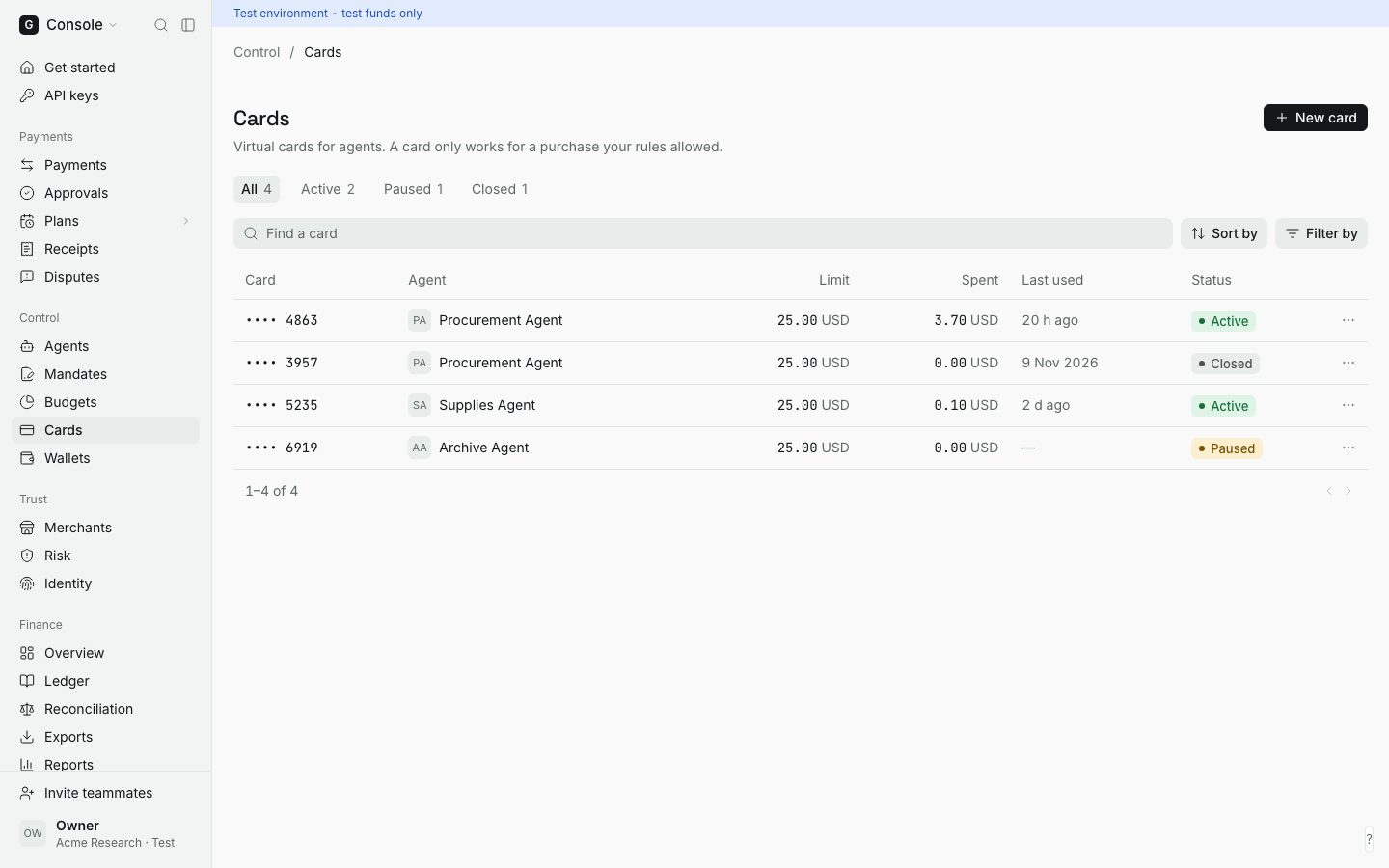
- One card per agent. The owner creates a virtual card for an agent whose mandate allows cards. Abazi stores only the card's reference and last four digits.
- A card purchase is an ordinary purchase. The agent requests it, and the policy decision and budget reservation run exactly as for a stablecoin payment, against the card limits in USD.
- The signer pays. Abazi's signer sends the card details to the merchant's checkout server to server. They never enter the agent's zone, logs or database.
- The card network asks Abazi. When the authorization arrives, Abazi looks for an open purchase by that card's agent for the same amount. A purchase ready to pay is approved; one waiting for a person is challenged; no match is declined.
- Settle. Clearing commits the reservation and issues a receipt. A void releases it. A return follows the refund path.
A card authorization cannot be held open while a person decides, so Abazi records it as challenged and declines that authorization.
Limits in the example mandate
| Limit | Example value |
|---|---|
| Card hard cap per authorization | 25.00 USD |
| Card auto-approve limit | 5.00 USD |
Screens
Boundaries
| Case | What happens |
|---|---|
| The card is used with no matching purchase | Declined with CARD_NO_MATCHING_INTENT, a risk event is written and the owner is alerted. |
| The authorization amount differs from the purchase | Declined with CARD_AMOUNT_MISMATCH. |
| The organization paused all payments | Declined with KILL_SWITCH_ACTIVE. |
| The agent is revoked | Its card is closed. |
| The same authorization arrives twice | Abazi returns the decision it already made. |
Cards are issued by Lithic: virtual cards, one per agent, each with a per-transaction spend limit. The full card rail, from issue to clearing, is on Virtual cards.
| Capability | How it works |
|---|---|
| Virtual card per agent | Issued on demand for any agent whose mandate allows the card rail. |
| Per-transaction spend limit | Set at issue and never higher than the card hard cap in the agent's mandate. Updated in place with one call. |
| Real-time authorization decisions | Every authorization is matched to an open purchase and answered approve, decline or challenge by Abazi's policy. |
| Pause, resume, close | One action from the console or the API. Revoking an agent closes its card. |
| Clearing, void and return | Clearing commits the budget reservation and issues a receipt. A void releases it. A return follows the refund path. |
| Leaked-card detection | An authorization with no matching purchase is declined, written as a risk event and sent to the owner. |
| Signed card events | Authorization and event webhooks are HMAC-verified before Abazi acts on them. |
API
The Cards operations in the API reference, each with its parameters, responses and code samples:
- GETList cards
/v1/cards - POSTCreate card
/v1/cards - GETGet card
/v1/cards/{id} - POSTPause card
/v1/cards/{id}/pause - POSTResume card
/v1/cards/{id}/resume - POSTClose card
/v1/cards/{id}/close
Next steps
Wallet
How the owner keeps the money, grants Abazi a capped on-chain spending permission on Solana, and funds and sweeps per-agent spending wallets on the other networks.
Billing
How installments and subscriptions run on Solana, approved once for their full terms and pulled on schedule through an on-chain subscription program with a cap per period.